
Trump Lights the Fire
Plus, The Legal Case Against His Military Call-Up

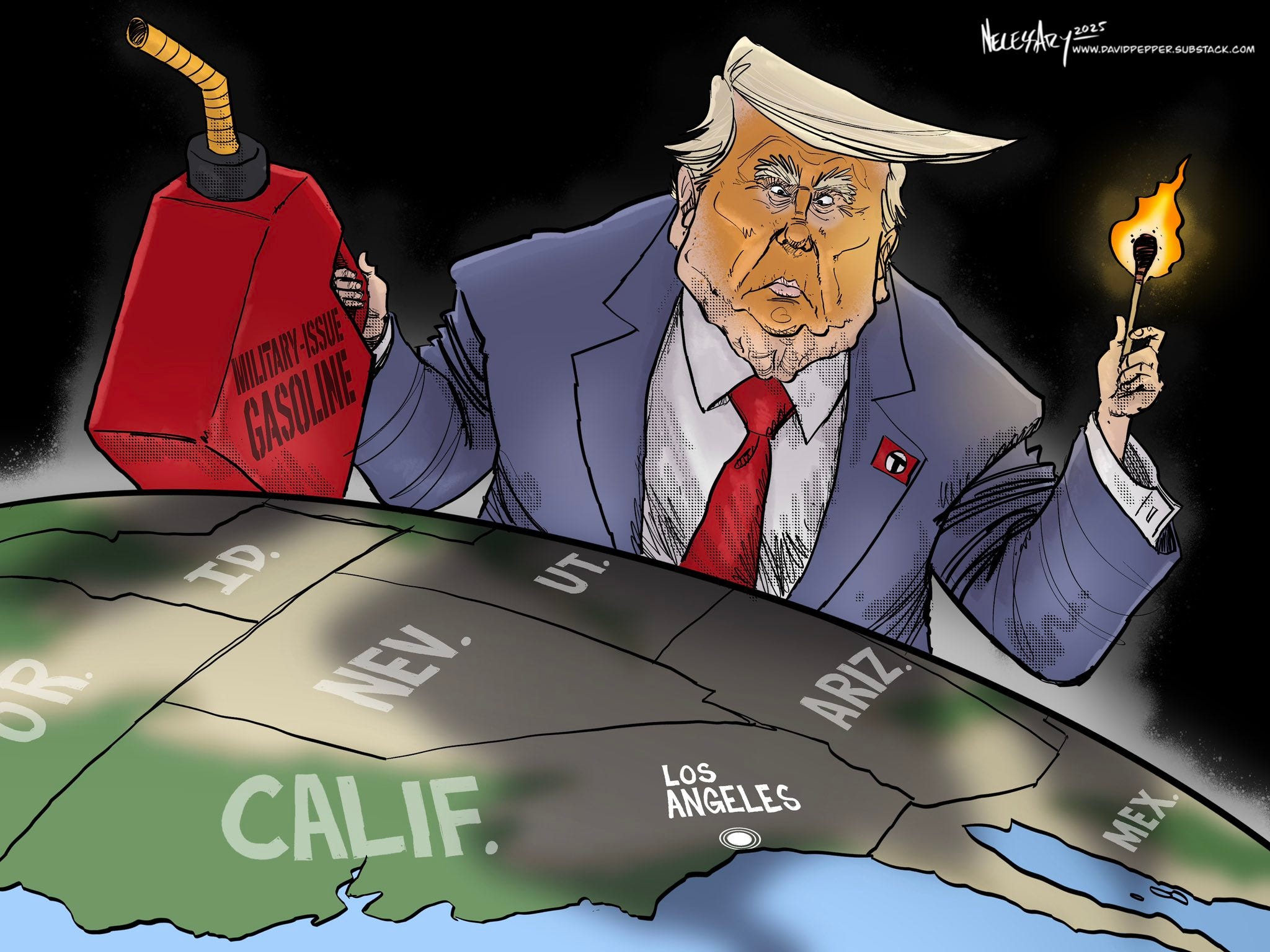
- by Kevin Necessary
As has been the case so often in this fraught term, the President’s Los Angeles actions —calling up the national guard over the objections of California’s Governor—rest on highly questionable legal grounds. To understand how shaky, let me share the argument made by California AG Rob Bonta (an old friend from college and law school, and one of the best public servants out there) in the case the state filed yesterday:
“The vehicle the President has sought to invoke for this unprecedented usurpation of state authority and resources is a statute, 10 U.S.C. § 12406, that has been invoked on its own only once before and for highly unusual circumstances not presented here. Invoking this statute, the President issued a Memorandum on June 7, 2025 (Trump Memo), ‘call[ing] into Federal service members and units of the National Guard.’”
“These orders were issued despite the text of section 12406, which, among other things, requires that when the President calls members of a State National Guard into federal service pursuant to that statute, those orders ‘shall be issued through the governors of the States.’ 10 U.S.C. § 12406. Instead, Secretary Hegseth unlawfully bypassed the Governor of California, issuing an order that by statute must go through him.”
“At no time prior to issuing the memorandum to federalize the California National Guard troops did the DOD seek approval from Governor Newsom to utilize California’s National Guard to protect federal agents and federal property, or otherwise notify or seek concurrence from the Governor or his office regarding the planned mobilization of the National Guard.”
“The President’s federalization and deployment of the National Guard for reasons not authorized by law and without input from or consent of the Governor contravenes core statutory and constitutional restrictions. Use of the regular armed forces is similarly unlawful here.”
“The Constitution grants the States—not the federal Executive—the authority to conduct ordinary law enforcement activities and to determine how their own state laws should be enforced. Reflecting the Founders’ distrust of military rule, the U.S. Constitution and the lawsof our Nation strictly limit the domestic use of the military, including the federalized NationalGuard. The Posse Comitatus Act codifies these strict rules, prohibiting the military from engagingin civil law enforcement unless explicitly authorized by law. The authority to use the military domestically for civil law enforcement is reserved for dire, narrow circumstances, none of which is present here….It appears that the Trump Administration intends to treat section 12406 as a mechanism to evade these time-honored constitutional limits. But the statute provides no such authority.”
“Deploying over 4,000 federalized military forces to quell a protest or prevent future protests despite the lack of evidence that local law enforcement was incapable of asserting control and ensuring public safety during such protests represents the exact type of intrusion on State Power that is at the heart of the Tenth Amendment…. Further, here the federal government is not merely intruding on the province of the State, but doing so by taking command of the State’s own resources, the California National Guard, which remains under State control unless properly federalized. Proper federalization has not happened here.”
California requests the court to declare Trump’s Memorandum federalizing the National Guard under 10 U.S.C. § 12406 and Secretary Hegseth’s Orders (and any future orders) calling the California National Guard into service to be illegal; and for an injunction prohibiting their actions.
You can read the entire complaint HERE.
And now, for Kevin’s Commentary:
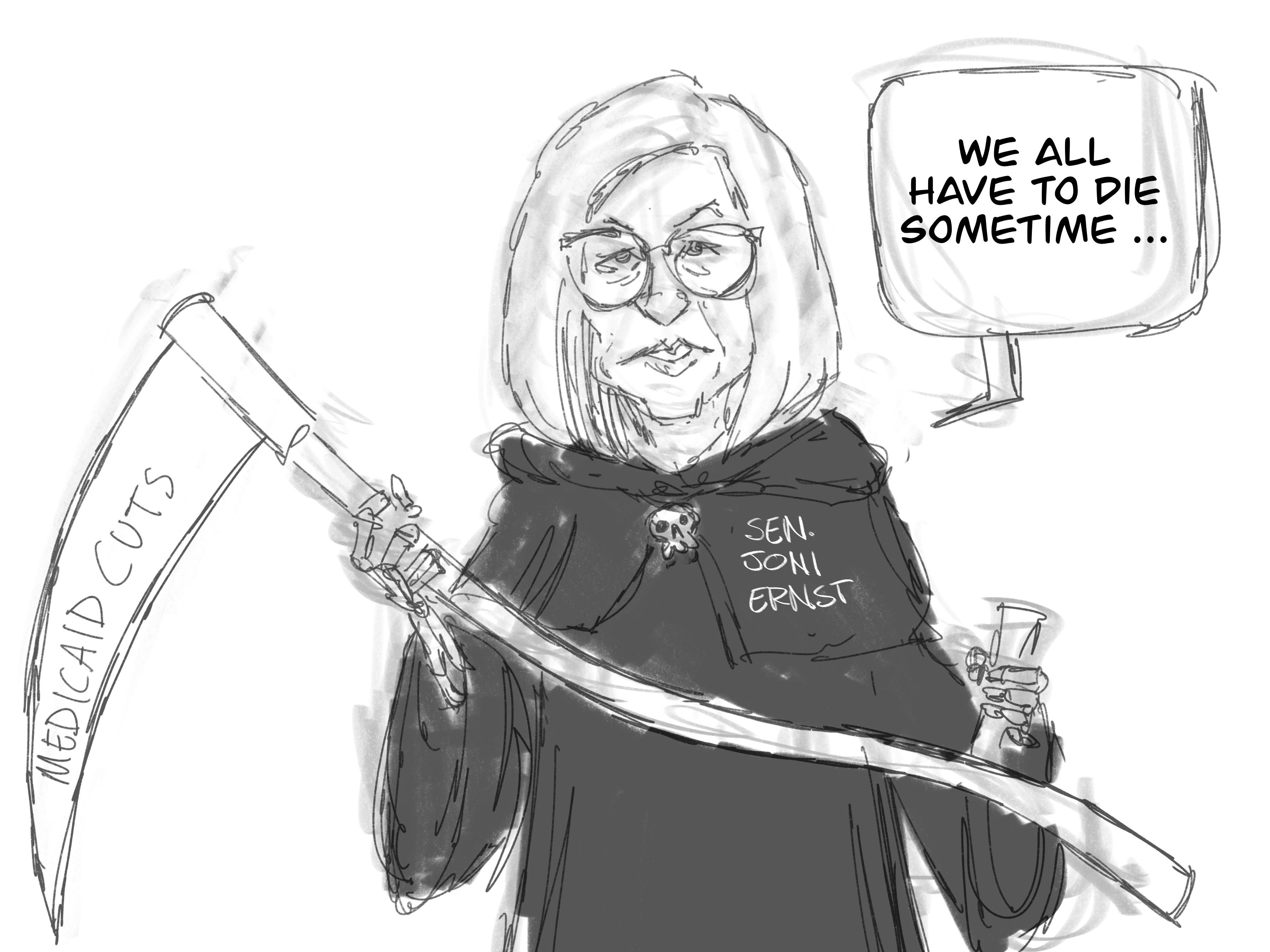
Welcome back, friends, to another behind the scenes look at my cartooning process. We’re all going to die, so we might as well use what time we have left to look at last week’s rough sketches.
Sketch 1: Drugged
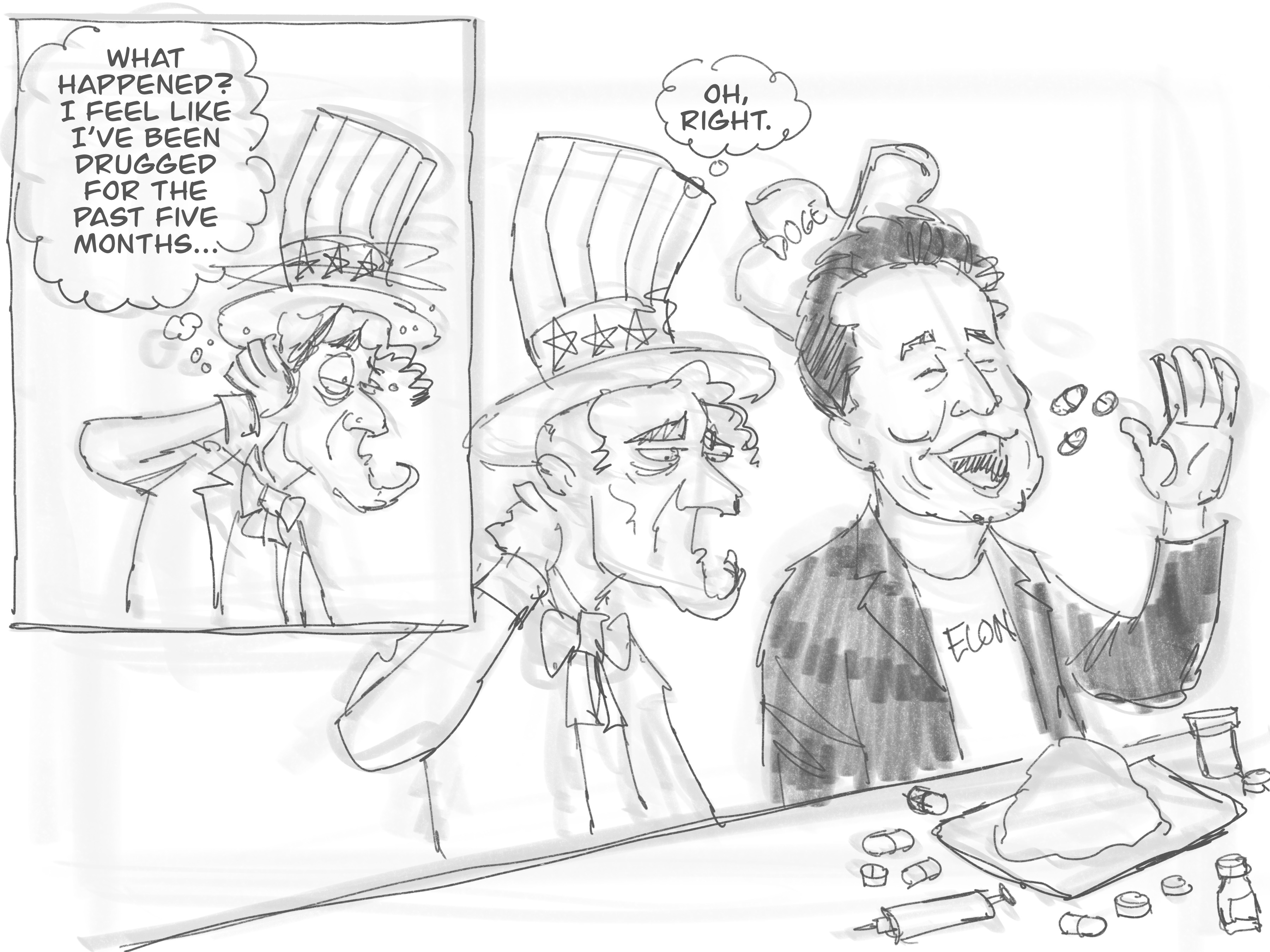
When I drew this sketch, Elon Musk and Donald Trump were still on speaking terms. Elon had stepped away from the Trump regime, though at the time it seemed temporary. Trump promised that Elmo would be back from time to time, maybe not as the head of the government-wrecking DOGE, but as Donny’s special friend. A New York Times article popped up detailing Musk’s rampant drug abuse during his time campaigning for and working for Trump, which led to this sketch.
Of course, everything changed in less than a week. It was revealed that Musk was involved in a physical confrontation at the White House with one or more Cabinet members. Elon went on Twit — er, X, and bashed Trump’s “Big Beautiful Bill,” followed by claiming Trump was named in the now-mythical Epstein files. Trump fired back, threatening to cut Elon’s government contracts.
The romance is over….
